


Providing HR professionals with the latest industry news, best practices, and thought leadership to help navigate the ever-changing landscape of human resources.



Substance use disorder affects far more workers than many organizations may realize. Its effects can show up in absenteeism, turnover, benefits costs, employee well-being and, in some cases, workplace safety.
For HR, that means thinking more broadly about what it means to support employees experiencing substance use disorder or working to sustain recovery. That certainly includes quick access to treatment and benefits, but it also involves the everyday workplace conditions that can make it easier, or harder, for someone to recover.
The scope of the issue is significant. In 2025, 44.6 million Americans age 12 and older met the criteria for a past-year substance use disorder. Yet only a fraction of those who needed treatment received it.
HRCI's own research suggests employers also have work to do. In this year's State of HR survey, one in five respondents said they had personally witnessed substance use on the job. And when we asked how prepared their organizations were to support employees in recovery compared with a year ago, 60% said they were no more prepared, including 13% who said they were less prepared.
These findings raise important questions for HR: How can we enable our own teams to support employees with SUD? And are we creating recovery-friendly workplaces where employees can seek help without putting their careers at risk?
These questions are at the heart of HRCI's new report, Recovery as a Workforce Strategy: How HR Can Play a Leadership Role and Address Substance Use Disorder in the Workplace. The report examines the impact of SUD on the workforce and, more importantly, the role HR can play in creating workplaces where employees can seek help and sustain recovery.
Recovery support is often treated primarily as a wellness initiative, but its implications reach much further.
A CDC analysis of 2018 employer-sponsored insurance data estimated that diagnosed SUD accounted for $35.3 billion in annual medical spending. Department of Labor data also shows that workers with SUD take nearly 50% more unscheduled leave and have a 44% higher turnover rate than their average colleagues.
The data on recovery tells another important part of the story. Employees in recovery average nearly 10% fewer unscheduled absences and have a 12% lower turnover rate than the overall workforce.
When employees are able to access treatment and sustain recovery, the benefits extend beyond the individual. Organizations can retain experienced employees, reduce disruption, and create healthier, more stable workplaces.
That is why recovery enablement belongs alongside other workforce priorities, including employee well-being, retention, benefits, and workplace culture.
Supporting recovery does not mean asking HR professionals to become health care providers. Our role is to make sure employees have access to appropriate policies, benefits, resources, and workplace support.
Substance use disorder should be approached with that same understanding.
For HR, that can mean examining whether policies unintentionally discourage employees from seeking help. It can mean ensuring benefits provide meaningful access to treatment. It can mean training managers to respond appropriately when an employee needs support. And it can mean building a workplace culture where asking for help does not feel like putting a career at risk.
A recovery-friendly workplace supports employees who are seeking or sustaining recovery through its policies, benefits, practices, and culture. Some organizations are formalizing that work through certification from the National Recovery Friendly Workplace Institute, an initiative of Global Recovery Initiatives Foundation. The process helps organizations translate a commitment to recovery into workplace practices. HRCI has proudly held this certification since 2024.
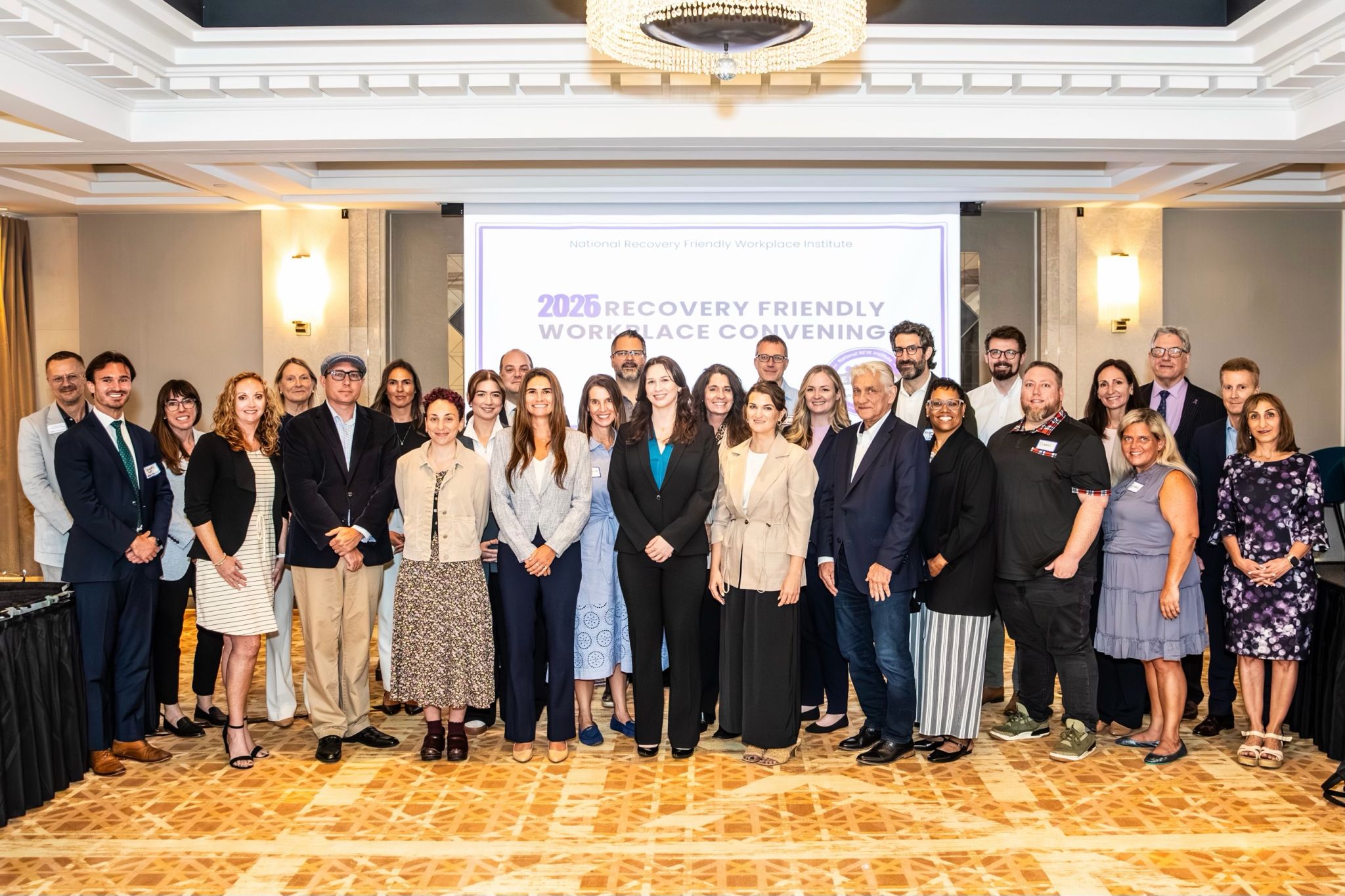
The 2026 National Recovery Friendly Workplace Convening
The framework encourages thoughtful assessment that can help HR teams identify where their policies and practices are strong and where more work may be needed.
HR already has many of the capabilities this work requires. We develop policies, prepare managers for difficult conversations, evaluate benefits, and shape workplace culture. The opportunity is to apply that expertise to recovery with the same care and intentionality we bring to other workforce issues.
Federal data show that fatal workplace overdoses remain far above where they were a decade ago, even after declining from 512 deaths in 2023 to 410 in 2024. Behind those numbers are employees, families, colleagues, and workplaces affected by substance use.
For me, that is the central message of this work. Recovery should not enter the conversation only after a crisis or when an employee asks for help. HR should be looking ahead, making sure the right policies, benefits, manager support, and workplace practices are already in place when employees need them.
That means looking closely at our organizational culture. As HR leaders, we have a responsibility to make sure employees have the support they need to remain part of the workforce and continue to thrive.